Industry Updates
You can master the latest information, new product , exhibition, promotion, etc
WARNING: This product contains nicotine. Nicotine is an addictive chemical.
WARNING: This product contains nicotine. Nicotine is an addictive chemical.

You can master the latest information, new product , exhibition, promotion, etc
You can master the latest information, new product , exhibition, promotion, etc
Release time:2026-07-24 13:43:14Views:
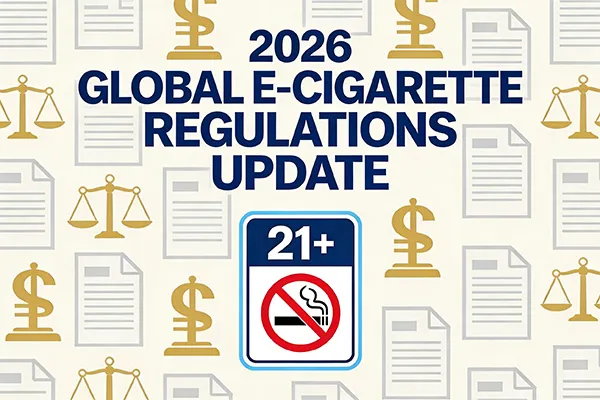
Global vape cross-border trade faces fragmented regulatory policies worldwide. Different sovereign markets enforce strict differentiated limits on e-liquid filling capacity and maximum allowable nicotine concentration, alongside mandatory certification, ingredient ban and packaging compliance clauses. Non-compliant shipments often face customs detention, cargo confiscation, heavy fines or permanent market access rejection. This comprehensive compliance guide sorts out up-to-date official regulatory red lines for major export destinations, focusing on two core indicators: e-liquid filling volume and nicotine strength, helping vape manufacturers, wholesale traders and cross-border sellers avoid logistics risks and smoothly complete customs clearance in global markets.
As vaping supervision tightens year by year, most countries classify e-cigarettes as tobacco-related consumer goods or medical supplies. The two most frequently audited customs indicators are total e-liquid volume per device/cartridge and nicotine mg per milliliter. Exporters must adjust product formulas, cartridge tank size and packaging according to target market rules before bulk shipment. This guide divides global markets into EU & European countries, North America, Asia Pacific, Latin America, fully prohibited regions, and elaborates binding regulatory standards one by one without complex tables for easy reading and reference.
1. European Market Compliance Standards
EU All Member States (Governed by TPD 2 Directive 2014/40/EU)
The EU Tobacco Products Directive is the unified baseline rule for all 27 EU nations, with consistent hard limits implemented by every member country. For nicotine-containing vape e-liquid, the legal maximum nicotine concentration is capped at 20mg/mL; no e-liquid can exceed this value, regardless of device type. In terms of filling volume, refillable e-liquid bulk bottles have an upper limit of 10mL per single bottle. Pre-filled vape pods, disposable vapes and built-in tank devices must have an internal e-liquid volume no higher than 2mL.
Additional binding compliance terms apply: caffeine, taurine, colorants and certain sensitizing flavors are restricted or prohibited. All products need pre-market notification six months before launch, with child-resistant packaging and graphic health warnings printed visibly. Multiple European countries including France, Germany and Finland add extra bans on fruit, candy and dessert flavors while retaining unified nicotine and volume limits aligned with TPD 2.
United Kingdom
The UK follows the core TPD 2 nicotine and volume rules: nicotine maximum 20mg/mL, disposable/pod tank ≤2mL, refill e-liquid bottle ≤10mL. Starting October 1, 2026, the UK enforces VPD vape consumption tax and VDS traceable stamp policies. Exporters must complete tax filing and package labeling formalities on top of existing size and concentration compliance. For medical-grade vapes sold under MHRA approval, customized nicotine strengths may be permitted only with full medical certification, which does not apply to general commercial export products.
Eurasian Economic Union (Russia, Kazakhstan, Belarus, Armenia, Kyrgyzstan)
EAEU unified nicotine regulation restricts e-liquid nicotine concentration below 20mg/mL. Disposable vape and closed pod filling volume cannot go over 2mL, and bulk refill liquid containers are limited to 10mL maximum. Raw material purity requirements are strict: propylene glycol purity needs to reach 95%, vegetable glycerin 94%, and tobacco-derived nicotine 99%. Synthetic nicotine faces strict entry barriers across all EAEU territories.
2. North America Market Rules
United States (FDA PMTA + State Local Regulations)
The US federal FDA standard sets the national upper nicotine concentration at 35mg/mL (3.0% weight percentage). Nicotine raw material purity must reach 90%±0.4%. Federal rules do not impose universal maximum filling volume limits, but each state adds localized restrictions. Utah tightens nicotine concentration down to 24mg/mL, while California, New York and Massachusetts restrict disposable vape tank capacity with regional caps.
All vape products sold in the US require PMTA pre-market tobacco authorization. Menthol and fruit flavors are banned in most states, and synthetic nicotine has separate FDA filing obligations. Electronic compliance covers FCC electromagnetic certification and CPSC lead coating limits. Exporters must match nicotine content to both federal and destination-state limits instead of only following nationwide rules.
Canada (TVPA Tobacco and Vaping Products Act)
Canada’s federal unified red line fixes nicotine concentration at maximum 20mg/mL, consistent with EU TPD standards. Pre-filled pods and disposable vapes allow no more than 2mL e-liquid filling volume, and large refill e-liquid bottles cannot exceed 10mL. Any vape product exceeding these two indicators gets refused entry at Canadian customs. Full ingredient disclosure, bilingual English-French health warnings and age-verified sales rules are compulsory supplements for export clearance.
3. Asia Pacific Countries Regulatory Breakdown
Australia
Australia adopts prescription-only management for nicotine-containing e-cigarettes. Commercial import of vape products with nicotine is totally banned for general trade; only consumers with formal doctor prescriptions can import small personal quantities. No legal wholesale export of nicotine vape is allowed to Australia. Zero-nicotine vapes are permitted with ACCC certification, with local authorities setting independent filling volume limits for non-nicotine hardware.
South Korea
South Korea’s Tobacco Control Act mandates strict laboratory testing covering 20 chemical items including nicotine, heavy metals and aldehydes. Legally permitted maximum nicotine concentration is 20mg/mL, with disposable vape and pod e-liquid filling capped at 2mL. All exported goods must pass KOLAS accredited lab testing. Sales channels are limited to certified tobacco stores and authorized online platforms, and clear nicotine addiction risk labels are mandatory on all outer packaging.
Japan
Japan allows two categories of vaping goods: nicotine heat-not-burn sticks and zero-nicotine atomizer liquid. Traditional freebase nicotine e-liquid for open/closed vape systems is prohibited from commercial import. Exporters can only ship non-nicotine vape hardware and flavorless zero-nicotine e-liquid to Japan; no nicotine-containing vape products qualify for regular customs clearance. Filling volume rules apply only to nicotine-free products following Japan’s consumer electrical safety standards.
Singapore, Thailand, India
These three countries enforce nationwide total bans on the manufacture, import, sale and possession of all nicotine vaping devices and e-liquid. No commercial vape export is feasible to these territories. Even zero-nicotine disposable vapes face confiscation upon arrival, so exporters need to exclude these destinations from target sales markets.
4. Latin America Representative Countries
Argentina
Argentina strictly restricts nicotine sources to tobacco-extracted nicotine only, fully banning synthetic nicotine. Legal nicotine concentration cannot surpass 20mg/mL. All pods and disposable vape tanks are limited to maximum 2mL filling volume. Non-tobacco flavors such as berry, mint and soda are prohibited; only pure tobacco flavor e-liquid can clear customs. Hazardous chemical additives including carcinogens and reproductive toxic substances are completely forbidden.
Brazil
Brazil implements a blanket ban on all nicotine e-cigarette imports and commercial trading. No nicotine vape products can be legally exported to Brazil regardless of nicotine density or tank size. Zero-nicotine vape hardware is allowed with national ANVISA registration, yet market supervision remains rigorous with frequent random customs inspections.
Mexico
Mexico sets the maximum nicotine concentration at 20mg/mL for compliant vapes, with pre-filled cartridge filling volume capped at 2mL. Refill e-liquid bottles must stay under 10mL. Imported vapes require Mexican health ministry notification and Spanish warning labels. Multiple border ports conduct random nicotine content testing; test failures lead to cargo destruction.
5. Middle East & Africa Core Export Markets
Most mainstream Middle Eastern nations including UAE, Saudi Arabia, Egypt adopt the EU-referenced 20mg/mL nicotine ceiling and 2mL disposable/pod volume limit. Saudi Arabia additionally requires SASO certification and bans sweet fruity flavors. South Africa follows TPD-aligned parameters: nicotine ≤20mg/mL, pre-filled tank ≤2mL, refill liquid ≤10mL, with mandatory tobacco health warning packaging. Many African emerging markets reference EU standards for convenient supervision, making TPD-compliant products adaptable for most African cross-border shipments.
6. Universal Export Compliance Checklist for All Vape Sellers
First, confirm target market nicotine upper limit before e-liquid formula production. Never use a unified nicotine strength for all global orders; tailor mg/mL values country by country. Second, control physical filling volume strictly. Classify goods into disposable vape, closed pod, refill bottle three types and match each category’s volume red line. Third, prepare supporting certification documents including TPD, PMTA, FCC, KOLAS and local health notifications according to destination requirements. Fourth, avoid restricted flavors and banned additives, complete full ingredient listing on packaging, and install childproof caps for liquid containers. Fifth, track real-time policy updates; many governments revise vape rules quarterly, especially disposable vape bans and flavor restrictions.
Conclusion
Vape foreign trade compliance relies fundamentally on accurate alignment with local nicotine concentration and e-liquid filling volume limits. No universal global standard exists; exporters must map each target country’s regulatory red lines separately. EU, UK, Canada, Argentina, South Korea, most Middle Eastern and African countries follow the widely adopted 20mg/mL nicotine plus 2mL disposable pod rule. The US uses a higher federal nicotine cap with state-level variations, Australia restricts nicotine vapes to prescription access only, while multiple nations enforce full vape bans.
Exporters are advised to build categorized product files sorted by export country, adjust e-liquid formulas and hardware tank sizes in advance, and reserve enough time for certification and testing. Strict adherence to official concentration and volume thresholds cuts customs risks, reduces return costs, and builds long-term stable cross-border vape business across global markets.