Industry Updates
You can master the latest information, new product , exhibition, promotion, etc
WARNING: This product contains nicotine. Nicotine is an addictive chemical.
WARNING: This product contains nicotine. Nicotine is an addictive chemical.

You can master the latest information, new product , exhibition, promotion, etc
You can master the latest information, new product , exhibition, promotion, etc
Release time:2026-04-13 14:18:11Views:
The quality of your e-liquid directly impacts both your vaping experience and your health. With thousands of products available on the market, distinguishing between premium e-juice and dangerous counterfeits has become essential for every vaper. This comprehensive guide will walk you through the key factors to consider when evaluating e-liquid quality, with detailed advice on selecting the right propylene glycol (PG), vegetable glycerin (VG), and nicotine salt formulations for your needs.
How to Judge Overall E-Liquid Quality
Check Packaging and Labeling
High-quality e-liquids always come with professional, detailed packaging that provides complete transparency about their contents. Look for clear labels that list all ingredients, exact PG/VG ratios, nicotine concentration, batch numbers, production dates, expiration dates, and manufacturer information. Reputable brands also include safety certifications such as CE, RoHS, and compliance with regional regulations like the EU Tobacco Products Directive (TPD).
Inspect Appearance and Consistency
Premium e-liquid should be clear or slightly translucent with a consistent color throughout. Cloudiness, sediment, or floating particles are clear signs of poor manufacturing or contamination. The liquid should have a smooth, uniform consistency without any separation between ingredients. If you notice layers forming in the bottle, this indicates improper mixing and low-quality production.
Evaluate Aroma and Flavor
Good e-liquid has a natural, balanced aroma that matches its advertised flavor. Avoid products with overly strong, artificial, or chemical smells, as these often indicate low-quality flavorings or harmful additives. When vaped, premium e-juice delivers a clean, consistent flavor without harshness, bitterness, or unpleasant aftertastes. The flavor should remain stable throughout the entire bottle and not degrade quickly over time.
Verify Manufacturing Standards
The best e-liquids are produced in clean, pharmaceutical-grade facilities following strict quality control protocols. Look for brands that publish third-party lab test results confirming their products are free from heavy metals, harmful chemicals, and contaminants. These tests should check for substances like lead, cadmium, mercury, formaldehyde, acetaldehyde, and diacetyl, which can cause serious health issues when inhaled.
Propylene Glycol (PG) Buying Tips
Understand PG's Role in E-Liquid
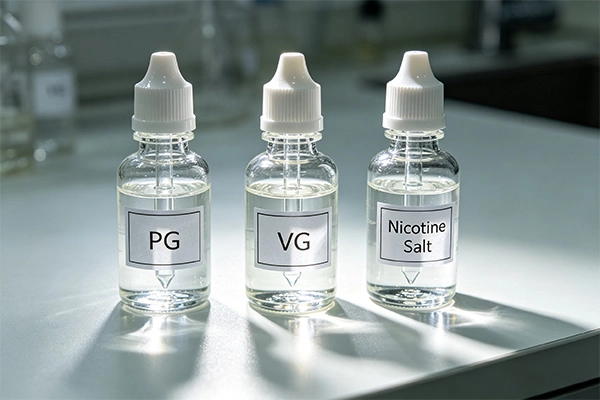
Propylene glycol is a colorless, odorless liquid that serves as the primary solvent in most e-liquids. It effectively dissolves nicotine and flavorings, provides the characteristic "throat hit" that many former smokers seek, and has excellent wicking properties. PG is generally recognized as safe (GRAS) by the FDA for use in food and cosmetics, though some people may experience mild throat irritation or allergic reactions.
Choose the Right PG Concentration
The ideal PG ratio depends on your vaping preferences and device type. Higher PG concentrations (50-70%) produce stronger throat hits and more intense flavors, making them perfect for mouth-to-lung (MTL) vaping devices and former smokers looking for a cigarette-like experience. Lower PG concentrations (30-50%) are better suited for direct-to-lung (DTL) vaping and those who prefer smoother hits and larger clouds.
Ensure Pharmaceutical-Grade Purity
Always select e-liquids that use USP (United States Pharmacopeia) or EP (European Pharmacopoeia) grade propylene glycol. This guarantees the highest level of purity and safety. Avoid products that use industrial-grade PG, which may contain harmful impurities like diethylene glycol, a toxic substance that can cause serious organ damage. Reputable manufacturers will clearly state the grade of PG used in their products.
Watch for Sensitivity Signs
If you experience persistent throat irritation, coughing, or allergic reactions when using high-PG e-liquids, consider switching to a lower PG ratio or a PG-free alternative. Many premium brands now offer VG-only e-liquids that provide a smoother vaping experience without sacrificing flavor quality.
Vegetable Glycerin (VG) Buying Tips
Know What VG Does
Vegetable glycerin, also known as glycerol, is a thick, sweet liquid derived from plant oils. It is responsible for producing the dense vapor clouds that many vapers enjoy and provides a smoother, milder throat hit compared to PG. VG is widely used in food, pharmaceuticals, and cosmetics and is considered safe for human consumption.
Select the Appropriate VG Ratio
Higher VG concentrations (70-80%) produce larger, denser clouds and are ideal for sub-ohm vaping and cloud chasing. They also provide a smoother, more comfortable vaping experience for those sensitive to PG. Lower VG concentrations (30-50%) offer better flavor definition and stronger throat hits, making them suitable for MTL devices and beginners.
Look for Pure, Food-Grade VG
Just like with PG, always choose e-liquids made with USP or EP grade vegetable glycerin. High-quality VG should be clear, odorless, and have a mild, natural sweetness. Avoid e-liquids with yellow or brown discoloration, as this may indicate impure or degraded VG. Premium brands use cold-pressed, organic VG that is free from pesticides and other contaminants.
Consider Device Compatibility
High-VG e-liquids are thicker and require more powerful devices with larger wicking ports to prevent dry hits and burnt coils. If you're using a basic pod system or MTL device, stick to e-liquids with a balanced PG/VG ratio (50:50) for optimal performance. Sub-ohm tanks and rebuildable atomizers can handle higher VG concentrations (70:30 or 80:20) without issues.
Nicotine Salt Buying Guide
What Are Nicotine Salts?
Nicotine salts are a form of nicotine that is naturally found in tobacco leaves. Unlike freebase nicotine, which is commonly used in traditional e-liquids, nicotine salts are more stable and absorb faster into the bloodstream. This provides a quicker nicotine hit that more closely mimics the experience of smoking a cigarette, making them extremely popular among former smokers.
Choose the Right Nicotine Strength
The appropriate nicotine strength depends on your smoking habits and vaping device. For heavy smokers (1+ packs per day), nicotine salt strengths of 20-50 mg/mL are recommended. Moderate smokers (½-1 pack per day) may prefer 10-20 mg/mL, while light smokers or those looking to reduce their nicotine intake can start with 5-10 mg/mL. Always start with a lower strength and gradually increase if needed to avoid nicotine overdose symptoms like dizziness, nausea, or headaches.
Ensure High-Quality Nicotine Salts
Premium nicotine salts are made from pure, pharmaceutical-grade nicotine and undergo rigorous testing to ensure safety and consistency. Avoid cheap, unbranded nicotine salts, as they may contain impurities or inaccurate nicotine concentrations. Look for brands that use benzoic acid to create their nicotine salts, as this is the most common and safest method.
Match Nicotine Salts to Your Device
Nicotine salts are designed for use with low-power pod systems and MTL devices that operate at lower temperatures. Using high-strength nicotine salts in high-power sub-ohm devices can result in excessive nicotine intake and harsh hits. If you prefer DTL vaping, stick to freebase nicotine e-liquids with lower concentrations (3-6 mg/mL).
Red Flags: Signs of Bad E-Liquid
Unusually Low Prices
If a deal seems too good to be true, it probably is. Extremely cheap e-liquids are often made with low-quality, untested ingredients and may contain harmful contaminants. Premium e-liquids require high-quality ingredients and strict manufacturing processes, which come at a cost.
Incomplete or Missing Labels
Any e-liquid that doesn't clearly list all ingredients, PG/VG ratios, nicotine concentrations, and manufacturer information should be avoided. This lack of transparency is a major red flag and indicates the product may not meet basic safety standards.
Strange Colors or Odors
E-liquid that is dark brown, black, or has an unusual color may be contaminated or degraded. Similarly, products with strong chemical smells, burnt odors, or unpleasant flavors should be discarded immediately.
Adverse Physical Reactions
If you experience persistent headaches, nausea, dizziness, throat irritation, or other unusual symptoms after using a particular e-liquid, stop using it immediately. These could be signs of poor quality or harmful ingredients.
Unverified Sources
Always purchase e-liquids from authorized retailers and reputable brands. Avoid buying from unknown sellers on social media, flea markets, or unregulated online platforms, as these are common sources of counterfeit and dangerous products.
Conclusion
Choosing high-quality e-liquid is essential for a safe and enjoyable vaping experience. By following the tips outlined in this guide, you can confidently evaluate e-liquid quality and select the right PG, VG, and nicotine salt formulations for your needs. Remember to always prioritize safety by purchasing from reputable vape brands that provide complete ingredient transparency and third-party lab testing results.
Investing in premium e-liquid not only enhances your vaping experience but also protects your health by minimizing exposure to harmful contaminants and low-quality ingredients. With the right knowledge and careful selection, you can find e-liquids that deliver exceptional flavor, smooth vapor, and satisfying nicotine delivery without compromising on safety.